Overview
About 379 wordsAbout 1 min
2026-05-29
Granary is a Raft consensus implementation in Zig, backing a replicated key-value store. It exists so I can learn Zig and have some fun implementing Raft from the paper.
Not production-ready
There's no real network transport or on-disk persistence yet. Treat Granary as a study of the Raft protocol rather than a database you'd run anything important on.
Why "Granary"?
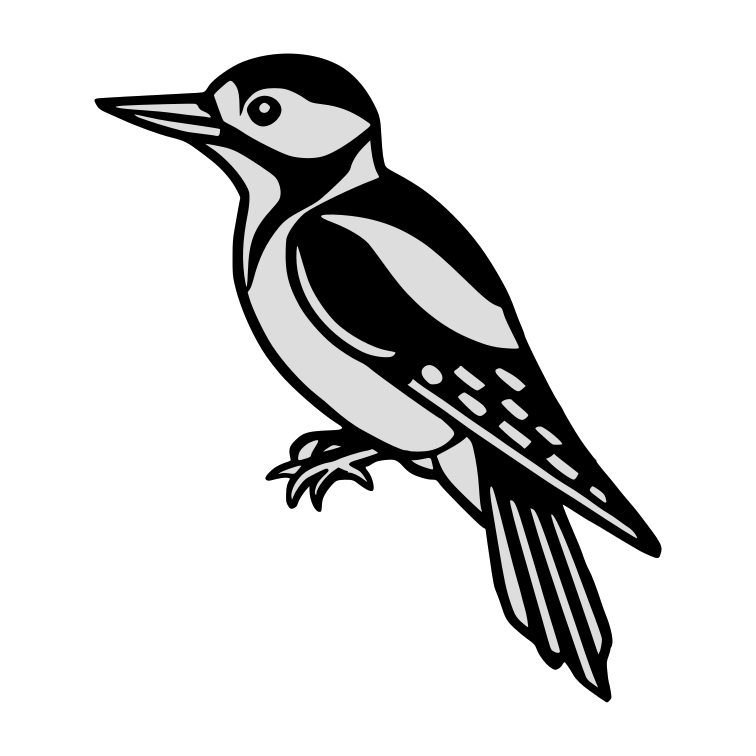
An Acorn Woodpecker group works together to maintain and defend a shared store of acorns. The same tree, the granary, gets reused across generations to hold the winter food supply. No single bird owns it; the flock keeps it consistent and durable together.
That's what a Raft cluster does with its log:
| Acorn Woodpeckers | Granary (Raft) |
|---|---|
| The flock | The cluster of nodes |
| The granary tree | The replicated log, shared across all nodes |
| Each acorn in a hole | A committed command (set / delete / get) |
| Defending the collection | Leader election and replication keeping the log safe |
| Reused across generations | The write-ahead log, replayed to rebuild state |
Fittingly, Specht is German for woodpecker.
What's implemented today
- Leader election:
RequestVoteRPC with term and log up-to-dateness checks (§5.2, §5.4) - Log replication:
AppendEntriesRPC with conflict truncation and idempotent re-appends (§5.3) - Heartbeats: empty
AppendEntriessent on a heartbeat interval - Tick-based event loop: a logical clock with randomized election timeouts and jitter
- Key-value state machine: in-memory
set/delete/get, applied in log order - WAL replay: state gets rebuilt by replaying a log of commands
- Binary wire format:
serialize/deserializefor commands, payloads, and RPCs - Type-erased transport: a vtable interface in the style of
std.mem.Allocator, with an in-memory test transport
Not yet built
Contributions and experiments are welcome here.
- A real network transport. Only in-memory and no-op transports exist today.
- On-disk persistence. The WAL binary format is defined and serializable, but nothing flushes it to disk or loads it back yet.
- Separate
commitIndex/lastAppliedadvancement with a dedicated apply loop. - Snapshots and log compaction.
- Cluster membership changes.
Next, see how the pieces fit together in the Architecture, or jump straight to Getting Started.